Reiki, Exorcists and Hospitals: Who Gets to Define Reiki?
In brief
The controversy surrounding Reiki in an Italian oncology department raises questions that extend beyond familiar disputes about religion, science and spirituality. It draws attention to the ways Reiki is translated and reshaped as it moves between cultural settings, healthcare institutions and different ideas of care.
From an anthropological perspective, this article examines how terms such as therapy, spirituality and complementary practice acquire meaning in particular contexts, and how religious authorities, healthcare institutions, practitioners and patients all participate—though from unequal positions—in defining what Reiki can become in the contemporary world.
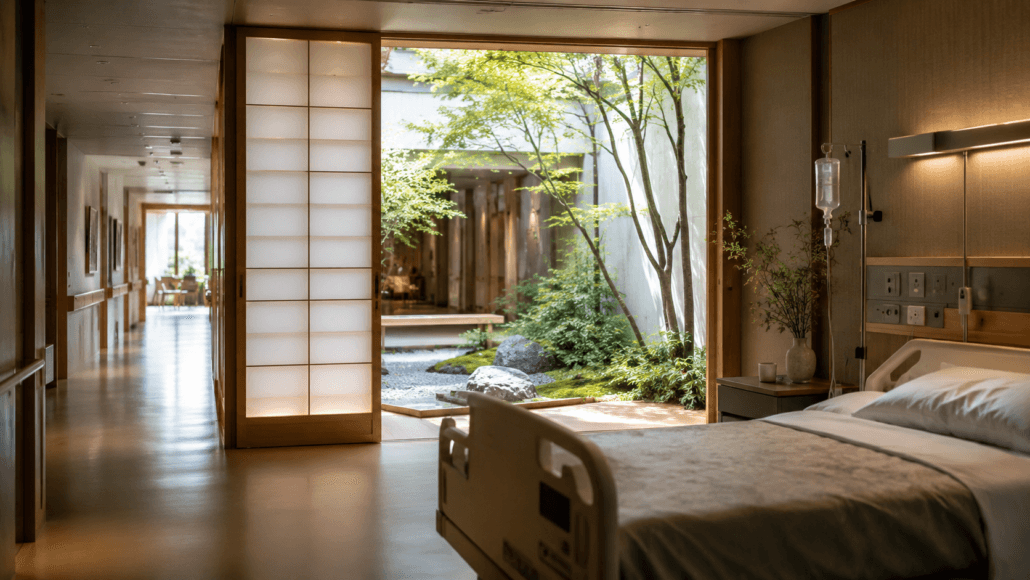
In July 2026, the International Association of Exorcists criticised the presence of Reiki in a well-being project linked to the oncology department of a hospital in Pesaro. Its statement interpreted the practice through Catholic theological categories, describing it as channelling or spiritualism and warning believers of possible spiritual risks.
The discussion that followed drew on several vocabularies at once: care and relaxation, spirituality, scientific legitimacy, and older tensions surrounding religion and medicine.
Much of the disagreement begins with the object itself: what kind of Reiki is being discussed?
The name gathers together practices, ideas and experiences that have changed as they have moved between communities and institutions.
As Reiki has travelled across periods, countries and institutions, it has been recast as a Japanese healing method, a spiritual path, an energy practice, a complementary intervention, a form of meditation and a technique for relaxation. These descriptions are not interchangeable labels attached to an unchanged object. Each took shape in a particular setting and helped orient what practitioners and recipients expected from the practice.
The controversy in Pesaro therefore concerns more than the compatibility of Reiki with Catholic theology. It also raises questions about cultural translation, authority and the public definition of practices that travel between different worlds.
Naming is already a form of interpretation
No one encounters an unfamiliar practice without bringing a vocabulary to it. The Association’s vocabulary includes spirit, grace, superstition, spiritual discernment and evil—terms with a long internal history and a real coherence for those who inhabit that tradition.
Questions arise when this theological vocabulary is allowed to stand as a complete public account of Reiki, rather than being recognised as one historically grounded interpretation of it.
Reiki took form in early twentieth-century Japan, amid changing religious institutions, therapeutic experimentation, bodily disciplines and projects of personal cultivation. The world in which Usui lived was already crossed by Buddhism, Shinto institutions, modern medicine, psychology, nationalism and ideas circulating from Europe and North America. No single tradition is sufficient to explain it.
To describe Reiki as “spiritualism” or “contact with evil forces” therefore does more than rename the practice. It draws Reiki into a Christian theological and moral map, making certain features prominent while making others harder to recognise.
European Christian and colonial encounters offer many examples of this kind of translation. Unfamiliar religious practices and forms of healing were classified as idolatry, magic or superstition and were thereby placed within existing hierarchies of religion, knowledge and civilisation.
Remembering this history does not settle the present dispute. It does, however, allow the categories used in the dispute to become part of the inquiry.
Reiki in European and North American spiritual fields
The Reiki community is not outside this process of translation. The image attacked by the Exorcists was shaped partly by theological interpretation, but also by the languages through which Reiki has been presented in Europe and North America.
As Reiki circulated through different European and North American settings, it became entangled with a wide range of spiritual, therapeutic and esoteric ideas. It was connected with channeling, chakras, cosmic frequencies, angels, ascended masters, past lives, quantum physics and forms of universal energy.
These elements carry very different weight from one lineage or practitioner to another and often coexist with more restrained therapeutic, meditative or secular accounts.
Tracing their genealogy does not require us to police a border between authentic and corrupted Reiki. Cultural movement changes practices: new relationships, institutions and needs become part of what those practices are. What deserves closer attention is how these changes are narrated. A recent element becomes more difficult to assess when it is presented as an ancient Japanese teaching, or when one contemporary vocabulary claims to reveal the timeless meaning of every religion.
Claims that Reiki is “the same energy found in all spiritual traditions” can feel generous because they promise a common horizon. Yet placing ki, prāṇa, Kundalini and the Holy Spirit under the English word “energy” creates a relation among concepts that belong to different semantic, ritual and theological worlds.
Such comparisons may generate meanings that are valuable to those who use them. The equivalence, however, takes shape through the comparison itself. It was not already present in the original contexts waiting to be uncovered. When this act of comparison disappears from view, a historically recent interpretation can begin to appear timeless and self-evident.
Modern Western esotericism, Theosophy, perennialism and later New Age spirituality have provided much of the grammar for these comparisons, often without being named. Cultural differences remain visible, although they are gradually reorganised around a prior idea of spiritual unity. Traditions can then appear distinct while their concepts are made to speak the same metaphysical language.
When universal claims meet one another
The Association speaks from a Catholic theology that distinguishes legitimate spiritual action from superstition and dangerous mediation. Some Reiki milieus speak from another form of universalism, in which a single energy is said to underlie religions and healing traditions.
These interpretations carry different institutional authority and have different public consequences. Still, they share a movement worth examining: each can extend a situated vocabulary beyond the world that gave it form and ask it to explain everyone else. The resemblance lies in this movement, not in an equivalence between the actors.
Public debate tends to compress these complexities. Reiki becomes a spiritual danger, a universal expression of love or an activity seeking scientific legitimacy; Catholic criticism becomes discernment, institutional interference, cultural misunderstanding or a residue of older conflicts.
Lived affiliations are less tidy. Christians may practise Reiki, healthcare professionals may value relational forms of support while remaining cautious about energetic explanations, and patients may participate without adopting the practitioner’s worldview. What matters, then, is how particular definitions acquire authority and what they permit, restrict or make thinkable.
Reiki as a situated practice
I use the expression situated practice to keep these shifting relations in view. By “situated” I mean that Reiki takes form through techniques, institutions, language, expectations and relations of authority.
A Japanese association in the 1930s, an American spiritual centre in the 1980s, a contemporary private practice and an oncology ward may preserve recognisable gestures while giving them different meanings. Initiation, personal transformation, relaxation, bodily awareness and supportive presence can overlap, although their relative importance changes with the setting.
None of these contexts contains the final meaning of Reiki. Each contributes to configuring a particular form of the practice.
Thinking in this way does not deny the experiences of practitioners or recipients. It allows us to explore how those experiences become meaningful.
Instead of asking only what Reiki is, we can also ask what Reiki is becoming in a particular situation.
The question “What is Reiki?” can therefore be joined by others: who introduces the practice, how is it explained, what expectations are created, and which forms of authority shape the encounter? What becomes possible to say or do in that particular setting?
These questions bring us closer to practice as it is lived rather than to an abstract object called Reiki.
Therapy is not a self-evident category
The word therapy carries more than one history. Within contemporary healthcare, it commonly names an intervention directed towards a diagnosed condition and tied to evidence, professional competence, safety and expected outcomes. In this institutional sense, Reiki should not be presented as a treatment for cancer or as a substitute for medical care, especially where serious illness increases the weight of promises and expectations.
Beyond this narrower use, however, therapeutic also circulates in relation to suffering, bodily balance, social relationships and the restoration of meaning.
Across different societies and historical periods, people have called therapeutic a wide range of practices concerned with suffering, bodily balance, social relationships, spiritual life and the restoration of meaning.
Even within contemporary healthcare, treatment does not concern only the biological process identified as disease. It also takes place around the person who experiences symptoms, uncertainty, fear and changes in everyday life.
Medical anthropology has often explored the distinction between disease as a clinical category and illness as lived experience. These dimensions cannot be separated completely. A diagnosis changes the way a person understands the body, relationships and the future. Social life, in turn, influences how symptoms and treatment are experienced.
Relaxation, bodily attention and supportive presence do not become medical treatments simply because they may be helpful. They can nevertheless acquire a therapeutic value within the wider experience of care.
This is why the language of “well-being” does not place Reiki entirely outside the therapeutic field.
Well-being, care and therapy overlap without becoming interchangeable.
A person may experience a Reiki session as calming or emotionally supportive. This experience does not demonstrate that Reiki treats the underlying pathology. At the same time, its significance need not be dismissed simply because it cannot be described as a clinical cure.
A careful contemporary formulation might therefore be:
Reiki is not a medical treatment and should not replace appropriate healthcare. It may nevertheless become part of an experience of care through touch, attention, relaxation and relationship, without thereby acquiring the status of a clinical therapy. Here, therapeutic refers to the meaning that an experience may have for a person; it does not by itself establish a specific effect or clinical efficacy.
I use this definition deliberately as a contemporary one, shaped by current ethical, scientific and legal responsibilities. It should not be projected backwards as though Reiki had always been understood in these terms.
Historically, the expression Reiki Ryōhō carried a more explicit orientation towards treatment, and early sources refer to illnesses, bodily conditions and ways of applying the hands. Reducing this history to relaxation would remove an important part of the practice’s earlier therapeutic horizon.
Recognising that horizon does not turn its vocabulary into contemporary evidence of clinical efficacy. It asks us instead to specify what we mean by therapy, how that meaning changes between contexts, and which responsibilities accompany its use today.
What happens when Reiki enters a hospital?
An oncology ward does more than supply a new location for Reiki. Its routines, professional roles, legal constraints and particular forms of vulnerability reshape what the practice can mean and what may responsibly be claimed for it.
Evaluation therefore has to follow the programme in practice: how Reiki is described, what expectations are created, whether consent is genuinely free, how practitioners understand the limits of their role, and whether supportive care remains clearly distinguishable from clinical treatment. Answers will vary from one programme to another; the label complementary settles none of these questions.
These questions do not produce a simple judgment about Reiki in hospitals. They create a framework through which a specific programme can be examined.
The fact that a practice is complementary does not automatically make it safe, meaningful or appropriate. Nor does its nonmedical character make it irrelevant to the experience of care.
Much depends on the setting, the conduct of practitioners and the way the activity is integrated.
In an oncology department, people live through medical procedures, waiting, changes in the body and uncertainty about the future. Clinical treatment remains central, but it does not contain the whole experience of illness.
A carefully framed Reiki session may be experienced as a moment of stillness, attention or human presence. Depending on the person and the encounter, it may be meaningful, neutral, uncomfortable or incompatible with religious convictions.
Responsible care makes room for this range while keeping the offer transparent, voluntary and proportionate to what can reasonably be supported.
Understanding and criticism can remain together
An anthropological account can remain critical while staying close to histories and practices. Reiki deserves scrutiny where it makes therapeutic promises, organises spiritual authority, commercialises vulnerability or enters institutions without adequate training and boundaries. The Association’s interpretation can likewise be examined through its theology and through the effects it produces within a plural healthcare environment.
Critique becomes more precise when it follows what people do, how they explain it and what consequences arise, rather than treating “the Church”, “science” or “the Reiki world” as coherent actors.
A Catholic may reject Reiki, another Christian may practise it, a secular patient may approach it as relaxation, and a practitioner may understand it through an energetic vocabulary. These positions may overlap, coexist or enter into friction. The tension becomes especially consequential when one account claims the right to define all the others in advance.
How words participate in shaping Reiki
The words used about Reiki are not external commentary; they enter its practice and governance. Describing it as spiritism makes certain features visible and actionable. Calling it universal divine energy foregrounds others. Presenting it as medical therapy creates particular expectations, while the language of relaxation may contain those expectations at the cost of obscuring parts of its history. None of these descriptions creates Reiki alone, but each influences how the practice is recognised, taught, permitted and restricted.
Responsible communication therefore requires a degree of historical self-awareness. Reiki has changed as it has travelled, and the spiritual vocabularies added in Europe and North America now belong to many—though not all—lineages. Its earlier therapeutic orientation also deserves recognition alongside the limits of contemporary clinical claims. In the Pesaro controversy, religious concerns, patient experience, medical responsibility and institutional authority intersect rather than forming separate layers.
They do not fit into a single, orderly explanation.
A final definition shared by everyone is unlikely to emerge. A more useful question may concern what each definition does: which Reiki it brings into view, whose authority it strengthens, and which histories or experiences recede.
The words we choose do not settle what Reiki is, but they help shape what it can become.
References
Associazione Internazionale Esorcisti (2026) ‘L’insidioso pericolo del Reiki’, 8 July. Accessed 29 July 2026. https://www.aieinternational.it/linsidioso-pericolo-del-reiki/
Hanegraaff, W.J. (1996) New Age Religion and Western Culture: Esotericism in the Mirror of Secular Thought. Leiden: Brill.
Kleinman, A. (1980) Patients and Healers in the Context of Culture: An Exploration of the Borderland Between Anthropology, Medicine, and Psychiatry. Berkeley: University of California Press.
Stein, J.B. (2019) ‘“Universe Energy”: Translation and Reiki Healing in the Twentieth-Century North Pacific’, Asian Medicine, 14(1), pp. 81–103.
Stein, J.B. (2023) Alternate Currents: Reiki’s Circulation in the Twentieth-Century North Pacific. Honolulu: University of Hawai‘i Press.
About the author
Federico Scotti
Federico Scotti è antropologo, filosofo e insegnante di Reiki tradizionale giapponese. È fondatore del Centro My Reiki a Milano, dove si occupa di formazione, pratica e ricerca sul Reiki. Il suo lavoro integra prospettiva antropologica e pratica corporea, con attenzione ai contesti culturali della cura.